Kids and Microaggressions: Shaking the Bricks Out of Their Backpacks
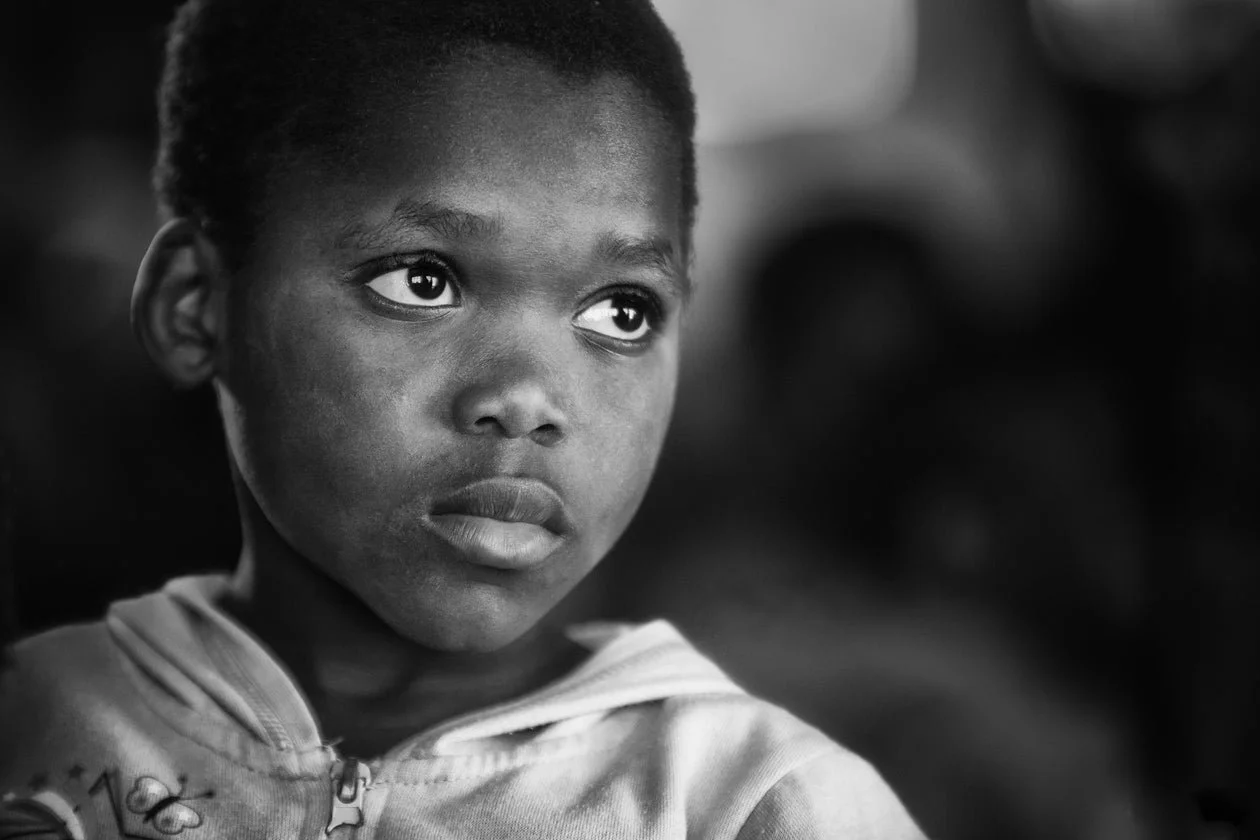
When microaggressions enter the world of children, the dynamics change completely. Unlike adults, children are actively building their self-esteem, forming their identity, and looking to the adults and peers around them to understand their place in the world.
When a child experiences a microaggression, they usually don't have the sophisticated vocabulary to label it. Instead, they just register a confusing feeling of "not belonging" or being "different" in a negative way.
The Reality in the Suburbs
Our family lives in a suburban neighborhood. My oldest three kids each had experiences that forced me to address the daunting issue of race in America. Inevitably, another kid on the street would point out to them that they were the Black kids on the block. (Thanks for telling us—we hadn’t noticed!)
Some people say we shouldn't "poison" our kids' minds with this stuff. I think people forgot that we live in a fallen world! I really tried not to lecture my children the way I was talked at when I was growing up. I tried to tap-dance around the subject. I have always been a person who challenges and questions the narratives around me. But what do you do when your child comes home crying because the boy down the street called her a "brownie"? What do you do when, every time your son is around a group of kids, they tell him he looks like some random Black celebrity he looks absolutely nothing like?
In my daughter’s case, I sat her down and asked, "Why do you think he called you a brownie?" She said, "Because my skin is brown." I asked, "Is there something wrong with brown skin?" She looked at me and said, "I don’t know."
"Let me answer that for you," I told her. "Your mom and dad have brown skin, and you look just like us. God made us beautiful like this. It is sweet to be a brownie."
Intentional Conversations and Practical Tools
Following those incidents, I had respectful conversations with the other children's mothers. They always assured me that their kids "meant nothing by it." I truly believe their kids were innocent, but it is worth noting that parents must actively teach their children how to respectfully engage with people who look different from them. When you are a minority, you do not want to be constantly reminded of it or repetitively compared to random people.
I have learned to become comfortable with the uncomfortable to help my children. We cannot control what other kids are not learning at home, but we can train our own children to use their words purposefully and confidently to teach people how to treat them.
In situations like these, it is vital to equip our children with scripted phrases they can use in the moment:
“You do not need to bring up my looks.”
“I am happy with myself. Why do you keep talking about my [skin/hair/features]?”
“What did you mean by what you just said?”
“That does not sound right. Would you like it if I said something like that to you?”
It is equally important to tangibly affirm their self-image at home. In 2023, my daughters and I started our loc journeys together as a positive, beautiful way to celebrate and lift up Black beauty.
My Own Journey: From the Hood to the Suburbs
Growing up, I heard my grandpa, uncles, and aunts who lived in the segregated South talk about the racism they experienced. But as a happy kid, I didn't give what they said much thought. The adults never explained how those historical experiences impacted me, so I never made the connection. It felt distant.
I didn't know much about racism because my entire world was Black. I grew up in a Black neighborhood, went to a Black church, and attended a Black school. My grades were always exceptional, but I didn't fit the mold of what the media portrayed Black culture to be. I was a girl living in the hood who listened to Britney Spears, loved to read, played video games, and drew sketches of Pokemon characters. I deeply wish those types of inner-city youth images were promoted more in the media. Because they weren't, I always felt out of place. I made friends, but I was far from popular. In time, I learned to embrace my inner nerdiness and became okay with not fitting into a specific box.
My very first experience with prejudice happened when I was about eight years old. My family was experiencing homelessness, and we were living in a temporary housing unit. I was isolated because I couldn't even attend school at the time due to our lack of a permanent address. One day, I saw a group of kids playing near our unit. Yearning to join them, I walked over.
They turned me away. One girl boldly told me I couldn't play because I was Black.
I scanned the group, pointed at another girl whose skin was brown like mine, and asked, "What about her? Why can she play with you? She is Black too."
The vocal blonde girl yelled back, “My mom said I can play with her because her mom is white—but not you.”
I was so confused. I just shrugged it off and went back to our unit. Here we were, united by poverty in a run-down apartment complex, yet separated by skin color. I can’t say it traumatized me, but it is an experience that permanently stuck with me. Ah, I thought later, is this what my older relatives were talking about?
The Loudness of Silence
My first experience being in a predominantly white environment on a regular basis was during my junior year of high school when I attended a career technology school. It was a massive culture shock. The school was huge—thousands of students—and felt like a mini-college. I met kids from all over the state: city kids, suburban kids, farm kids, and a few of us from the inner city. This was back in the early 2000s, and because it was a tech school, we each had our own personal laptops, which was a very big deal at the time.
I did exceptionally well academically, but I quickly noticed that the teachers were generally indifferent to me. At my old school, I was consistently awarded and recognized for my academics. Here, the instructors barely called on me, rarely acknowledged my high performance, and never invited me to special academic events or competitions.
I chose graphic design and technology as my focus, but I felt completely unsupported. It is so important for educators to show genuine care and encouragement. You never know what a simple “good job” can do for a kid trying to break out of a rough situation.
I have heard heartbreaking testimonies from other Black individuals whose instructors explicitly discouraged them from pursuing certain fields. While I didn't experience overt verbal discouragement, the silence and indifference were deafening. The same instructors who ignored me would sit down, smile, and deeply engage with the white students. Teaching me felt like a chore to them. As a result, I stopped speaking to the adults or seeking support. I stayed for one year and then returned to my home high school. It was a lonely, isolating experience.
A Good Reason to Homeschool
That experience is a major driving force behind our family’s deeply spiritual and purposeful decision to homeschool. As an adult, I recognize that while it is primarily a parent’s job to build a child's confidence, educators should still make an effort to support every student. Teachers are human, and they will naturally gravitate toward certain personalities, but I wanted a more intentional environment for my own children.
We want every single aspect of our children's being to be affirmed and rooted for as long as possible before we push our little birdies out of the nest to face a cold world. We want to equip them to be positive image-bearers—proud of the little masterpieces God created them to be.
There is an unhealthy, self-defeating, and depression-inducing way to talk about race relations in the United States—one that breeds a victim mentality. I completely reject those negative frameworks. Instead, I encourage my children to rise above the limitations of people who judge them based purely on their phenotype.
This is a call to honest assessment, not paranoia. As Christians, we are required to judge everyone by their fruit (Matthew 7:16). If your child is experiencing microaggressions or perceived negativity, it is irresponsible to ignore it, euphemize it, or deflect. When people question your child's attributes or their right to occupy a space, we must stand up, notify the adults involved, and deliberately pour truth back into our children to repair the damage. I know these conversations can be uncomfortable for other parents, but why should their child be comfortable making my child uncomfortable? On the flip side, I welcome accountability regarding my own children. That open communication is how we grow together as a collective community.
Our children are fearfully and wonderfully made—and it's our job (not a government sponsored program) to make sure they never forget it.